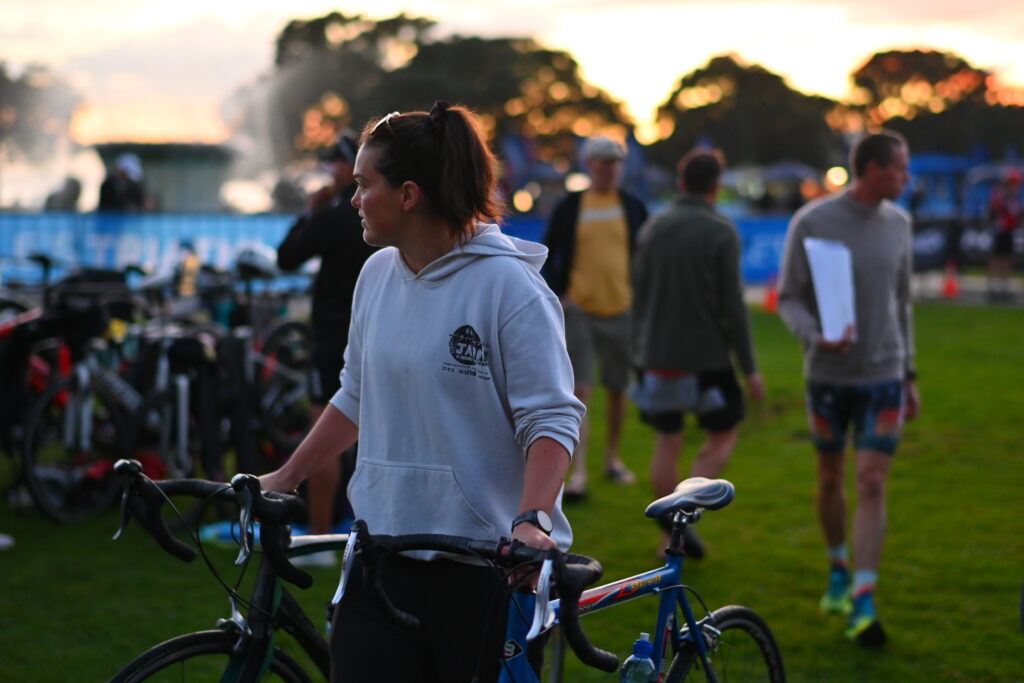
Your kit is on the floor, your alarm is set for an unreasonable hour, and you’ve checked the forecast nine times. Here’s what’s actually worth doing the night before a triathlon.
Tonight’s job is simple: make tomorrow morning easier. Get the small jobs done, then give yourself permission to switch off.
Pack while your brain is still working
Lay out your gear in the order you’ll use it: swim, bike, run, then something dry for afterwards. Check it against a list instead of wandering around the house hoping the missing item will introduce itself.
Think goggles, wetsuit if you’re using one, helmet, shoes, race clothing, towel, bottles and whatever food you’ve practised with. Add the bits from your race pack if you’ve already collected it. If you’re collecting on race morning, have your entry details ready and allow time for that too.
Put the bag somewhere obvious. Put the bike somewhere obvious. Make sure the person driving knows the bike is coming. These are small details until they aren’t.
Check the bike. Resist the redesign.
Give your bike a sensible check before the evening disappears. Look over your tyres, brakes and wheels, and make sure anything that needs attention gets sorted. If you’re unsure about a problem, get help with it.
Once it’s ready, leave the setup you know alone. A new saddle height, a different pair of shoes or an ambitious mechanical project can wait. An excellent race-eve outcome is owning the same working bike you owned at lunchtime.
Charge the devices you’ll use, then put them with your gear. Your watch does not need to spend race morning on the kitchen bench achieving 100% battery.
Have dinner, not a food challenge
Keep dinner familiar. Something you enjoy, have eaten before training and know sits well with you is a good place to start. There’s no prize for eating the largest bowl of pasta in the postcode.
Stick with the food and drink routine you’ve practised. Race eve is a poor time to try a new supplement, a mystery sports drink or your mate’s very specific theory about beetroot.
Sort breakfast while you’re here. Know what you’re eating, make sure you actually have it, and put out whatever you’ll need. Discovering an empty bread bag before sunrise is a deeply unnecessary plot twist.
Work backwards from when you need to arrive
Open the Race Guide and check the details for your event and distance. Know where you’re going, where to park, when registration and transition close, and when you need to be ready for your briefing and start.
Work backwards from your planned arrival time. Allow for the drive, parking, walking in, collecting your pack if needed and getting set up. Your start time is not your target arrival time.
Set your alarm, agree a departure time with anyone travelling with you and put your keys where you can find them. Tomorrow’s slightly sleepy version of you will appreciate the assistance.
Check the forecast, then close it
Have a look so you can pack sensible layers and whatever else you’ll need for the conditions. Check the organiser’s latest updates too.
Then give the refresh button the evening off. Comparing six weather apps until one says what you want is not a reliable way to improve the forecast.
Once the practical jobs are done, do something ordinary. Watch something, read a book or spend time with the people who’ve heard quite enough about your transitions for one week. Any last-minute urge to prove your fitness can wait.
Go to bed without making it another event
Give yourself time to wind down and get to bed at a sensible hour. If you’re a bit excited or nervous, you don’t need to fix every thought before you’re allowed to rest.
Try not to turn a slow drift off into a running calculation of how many hours you’ve got left. Put the phone away, get comfortable and let the evening be finished.
You’ve done the preparation you can do tonight. Tomorrow, follow your plan, ask the crew if you need a hand and give yourself a chance to enjoy it. The goggles are packed. You checked.
Your five-minute race-eve checklist
- Race Guide and any event updates checked.
- Kit packed and bike checked.
- Breakfast planned and bottles ready.
- Travel, parking and departure time sorted.
- Devices charged and alarm set.
All done? Good. You can stop packing now.